We Teach Trading — Zero Tips, Zero Advice, Zero Recommendations. Not registered with SEBI or any financial regulator worldwide.
We Teach Trading — Zero Tips, Zero Advice, Zero Recommendations. Not registered with SEBI or any financial regulator worldwide.
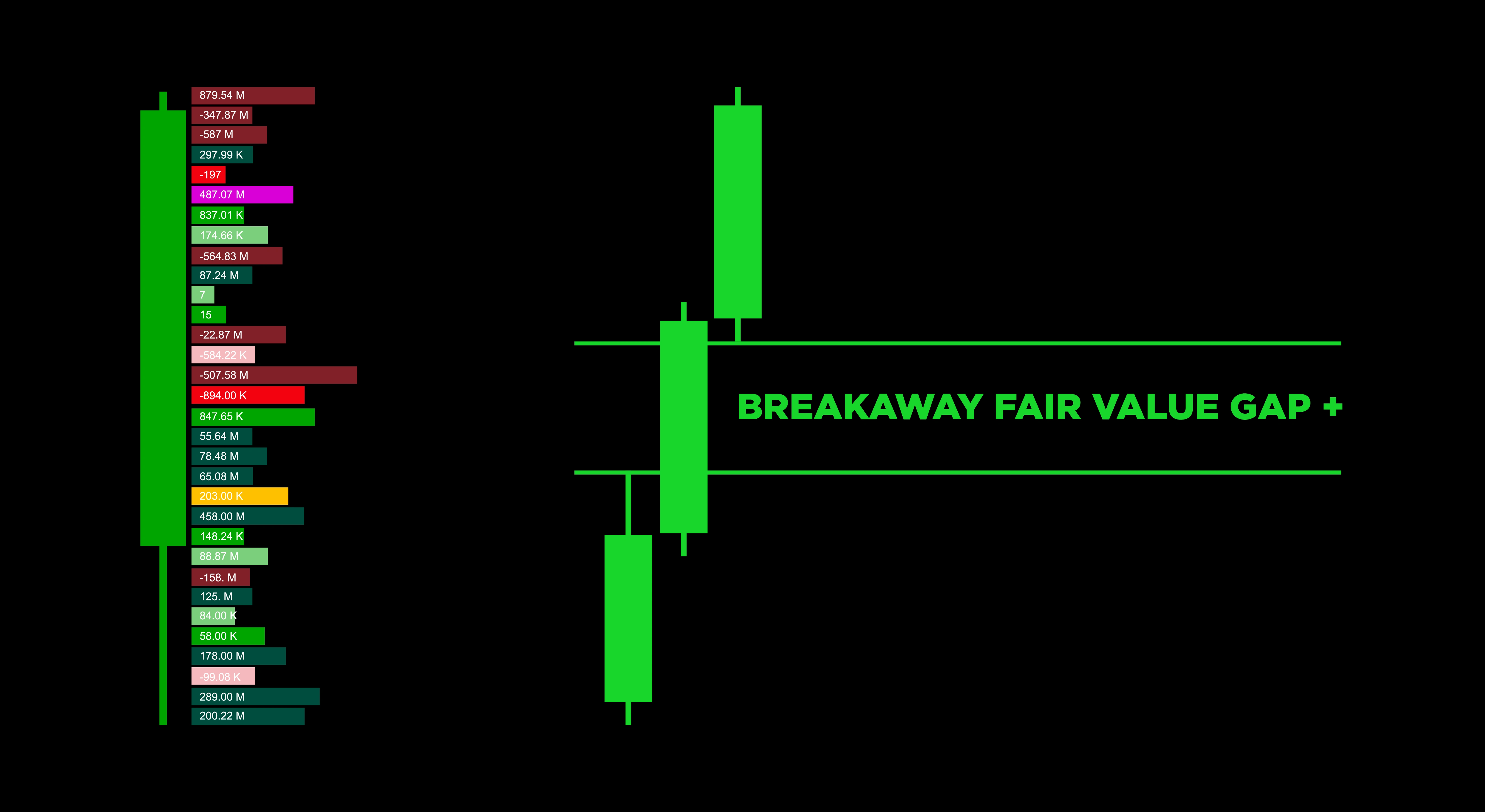
You have seen it everywhere. FVG. Three letters slapped onto a chart by people who cannot tell you why the gap is there. They draw a box. They tell you to buy when price comes back to it. They never explain what actually created it.
That is the problem. Not the concept. The teaching.
A Fair Value Gap is one of the cleanest reads in all of price. It is a fingerprint left behind by institutional order flow. But the retail internet turned it into a magic box. Draw the rectangle, wait for the tap, click buy. No structure. No context. No understanding of the money that moved.
This is where the NIC No Indicator Concepts approach starts from a completely different place. We do not treat the Fair Value Gap as a signal. We treat it as evidence. Evidence of imbalance. Evidence of who was in control. Read that way, the gap stops being a guess and starts being a sentence in the language institutions actually speak.
Let me walk you through it the way I teach it.
Strip away the hype. A Fair Value Gap is a region of price where the market moved so fast in one direction that it skipped over an entire range. Buyers or sellers stepped in with such force that price did not trade evenly through that zone. It leapt.
Look at any three consecutive candles. When the body of the move is aggressive enough that the first candle and the third candle leave an untouched window between them, that window is the gap. Price delivered itself unfairly. One side got overwhelmed.
No indicator drew that. No RSI. No moving average. The gap is pure price. It is the chart telling you, in its own handwriting, that something heavy passed through here.
That is the whole point of reading markets without indicators. The information was always in the price. Indicators just smear a lagging average on top of it and slow you down.
This is the question almost nobody answers. And it is the only question that matters.
Fair Value Gaps form because of imbalance in institutional order flow. When a desk needs to move size, it does not tiptoe. It pushes. Aggressive market orders hit the book faster than passive orders can absorb them. Price tears through levels because there is simply not enough opposing liquidity sitting there to slow it down.
The gap is the scar of that aggression.
Think about what that means. The gap is not random. It is the visible trace of a moment when one side stopped being polite. Buyers lifted every offer in their path, or sellers hit every bid. The market could not find fair value, so it left a hole where fair value should have been.
When you understand that, you stop asking "is this a buy zone." You start asking the real questions. Who created this imbalance? Has the order flow that caused it finished, or is it still running? Is the volume confirming the story the gap is telling, or contradicting it?
Those are institutional questions. That is the shift.
The retail version of FVG trading is mechanical and blind. See gap. Mark gap. Wait for price to return. Enter. No thought about whether the imbalance has been resolved. No thought about whether order flow has shifted. No thought about what the volume is saying underneath.
It treats every gap as equal. They are not.
Some gaps are formed by genuine institutional intent and they hold meaning long after they print. Others are formed by thin, low-conviction moves that mean almost nothing. The retail method cannot tell the difference because it never learned to read the order flow that built the gap in the first place.
This is why so many traders get chopped up. They are trading the shape and ignoring the cause.
Here is where it gets serious. A Fair Value Gap on its own is half a story. Order flow is the other half.
Order flow is the study of how orders actually hit the market. Aggression versus absorption. Who is initiating and who is defending. When you overlay the reading of order flow onto a Fair Value Gap, the gap stops being a static box and becomes a live read.
Did the gap form on expanding aggression, with one side clearly initiating? Or did it form into thinning participation, a move running out of fuel? When price eventually revisits the gap, is fresh order flow stepping in to defend it, or is it being walked straight through?
These distinctions are everything. The gap tells you where the imbalance happened. Order flow tells you whether that imbalance still has weight behind it. One without the other is incomplete.
Inside NIC, we never read a Fair Value Gap in isolation. We read it as part of a sequence. The structure that led into it. The order flow that built it. The behaviour of price and participation when it returns. That sequence is what turns a drawing into a framework.
Now add the deepest layer. Volume footprint.
A volume footprint chart shows you the actual volume traded at each individual price, broken down by whether it hit the bid or the offer. It is the closest a chart-reader gets to seeing the order book come to life. Where indicators give you a lagging average, footprint gives you the raw transaction record. Who traded, where, and with what aggression.
Apply this to a Fair Value Gap and the picture sharpens dramatically.
You can see whether the move that created the gap carried real volume conviction or whether it was thin and hollow. You can see, when price returns to the gap, whether buyers or sellers are actually showing up at that price or whether the level is being abandoned. You can read absorption. You can read exhaustion. You can read the difference between a level institutions care about and a level that just looks pretty on a clean chart.
This is the part that no indicator can ever replicate, because footprint is not a derived calculation. It is the trade record itself.
When you combine the gap, the order flow, and the footprint, you are reading the same three layers a professional desk reads. Structure. Flow. Volume. That is the institutional framework. That is NIC.
The Institutional Fair Value Gap framework is one of the proprietary structures taught inside the NIC Pro program at Kumar Singh Global Trading Academy. It does not stand alone. It connects to the wider No Indicator Concepts methodology, the structural reading, the order flow study, and the volume footprint work that runs through the entire curriculum.
We teach the gap as a concept to be understood, not a button to be pressed. The goal is not to hand you a rule. The goal is to build the eye. To get you to the point where you look at a Fair Value Gap and you instinctively ask the right questions about the money that built it.
That is a skill. It takes structured study, repetition, and discipline. There is no shortcut, and I would not respect you enough to pretend there is one.
Let me be straight with you, because that is how I teach.
Understanding Fair Value Gaps will not make markets easy. No concept does. What it does is replace guessing with reading. It moves you from drawing boxes you do not understand to interpreting the structural and order flow story underneath them.
This is education. It is the study of how institutional markets behave and how to read price, order flow, and volume the way professional desks read them. It is not a signal service. It is not a tip. It is not a recommendation to buy or sell anything. And it carries no assurance of any result. Markets are risk. They always will be.
What I can offer is the framework, taught honestly, in plain language, the same way I have studied these markets for three decades. The rest is your work to do.
If you are done drawing boxes you cannot explain, and you want to understand the institutional logic underneath the Fair Value Gap, that is exactly what the NIC No Indicator Concepts methodology was built to teach.
Pure structure. Real markets. Zero indicators.
This article is published by Kumar Singh Global Trading Academy (OPC) Private Limited for educational and informational purposes only. The academy is not registered with the Securities and Exchange Board of India (SEBI) or with any financial regulator in any jurisdiction, and does not provide investment advice, trading signals, tips, recommendations, or any assurance of outcomes. Trading and investing carry a substantial risk of loss and are not suitable for everyone. Past performance is not indicative of future results. Always consult a licensed and regulated financial professional in your country of residence before acting on any concept discussed here.
A Fair Value Gap is a window of price the market skipped over because one side moved with too much force for the other to absorb. Look at three candles. When aggression leaves an untouched range between the first and the third, that range is the gap. It is pure price. No indicator draws it. It is the chart showing you where heavy money passed through.