We Teach Trading — Zero Tips, Zero Advice, Zero Recommendations. Not registered with SEBI or any financial regulator worldwide.
We Teach Trading — Zero Tips, Zero Advice, Zero Recommendations. Not registered with SEBI or any financial regulator worldwide.
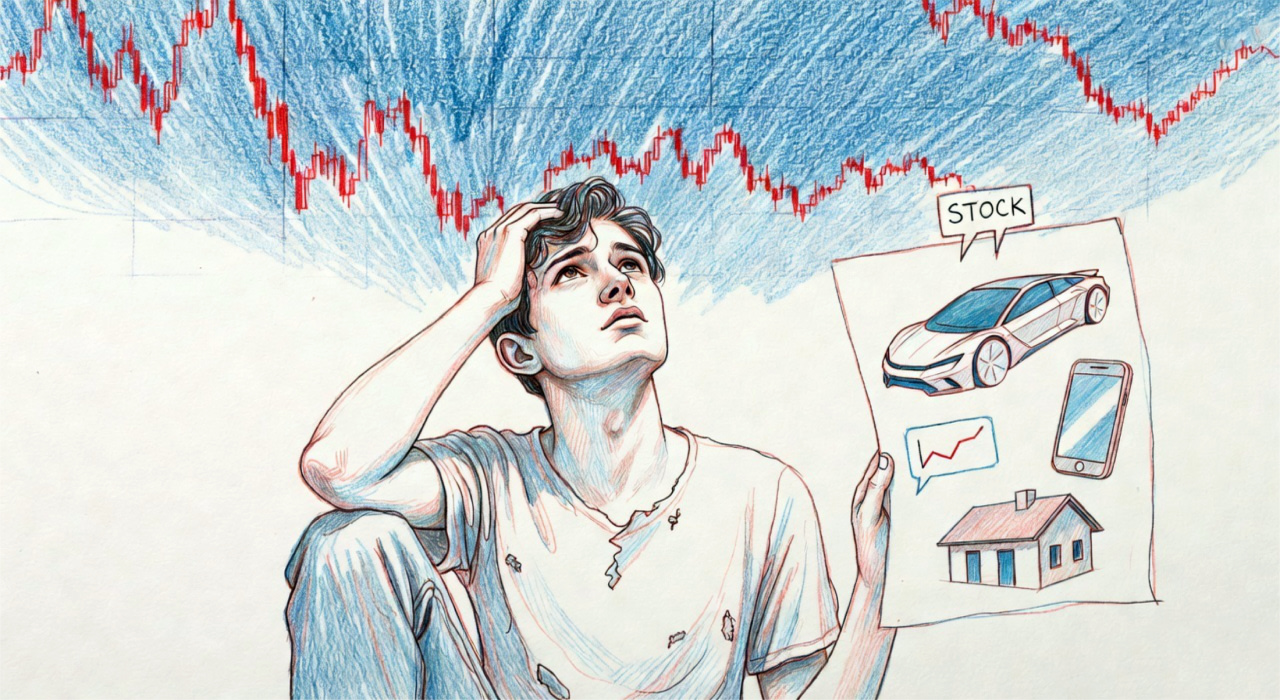
Before you download another indicator or trust a stranger's P&L screenshot, learn what actually moves markets. Real structure, taught from day one.
Skip the cluttered PDFs, fake P&L screenshots and lagging indicators. Learn order flow and volume footprint, the way markets actually move, from day one.
Every year, thousands of people in India and around the world open a trading account, download a futures and options PDF they found on Telegram, and lose money in the first three months. Not because they're careless. Because nobody told them where to actually start.
I've been watching markets since 1994. I've watched the tools change, the platforms change, the language change. What hasn't changed is the trap beginners fall into on day one, and it's not a market problem. It's a starting-point problem.
Open YouTube and search "futures and options trading for beginners" and you'll get thousands of videos, most of them recorded years ago, most of them repeating the same fifteen indicators with no context on why price moved. Search for a free PDF and you'll get a 200-page document that reads like a textbook and teaches you nothing about how a real order actually fills.
Then there's the part nobody talks about openly:
Photoshopped P&L screenshots from self-styled finfluencers who've never actually traded live capital in a drawdown.
Simulator software tuned to show fake profits so a course looks more convincing than it is.
Cheap indicator bundles sold as "secret strategies," all lagging the same price action by design.
Self-declared "gurus" whose only credential is a following, not a track record.
Put a beginner in front of that combination and you get one outcome: a trading account that's broke before the trader ever understood what a candle actually represents.
Here's the part that gets skipped in every free PDF and every 10-minute YouTube "strategy" video: price doesn't move because of an indicator. It moves because of orders. Buyers and sellers transacting at specific prices, in specific volumes, at specific moments. That's it. Everything else, every oscillator, every moving average crossover, every colored arrow, is a derivative calculation built after the fact from that same price and volume data.
Order flow is the study of those transactions as they happen. Volume footprint takes it further, showing exactly how much volume traded at each price level within a candle, not just the open, high, low and close. Where did buyers step in aggressively? Where did sellers absorb the pressure? Where did the market show conviction, and where did it show hesitation? That's information a lagging indicator simply cannot show you, because by definition, it's calculated after the price has already moved.
For a complete beginner, this matters more than almost anything else in the first ninety days of learning. Start with lagging indicators and you build habits around signals that are structurally late. Start with order flow and volume footprint, and you build the habit of reading the market as it's actually behaving, right now, in front of you.
A common piece of advice given to beginners is to "start simple" with two or three indicators before moving to anything advanced. It sounds reasonable. In practice, it's how most retail traders end up stuck for years, because every indicator, no matter how simple, is built on the same lagging foundation. You don't graduate out of lag by adding more lagging tools. You graduate out of it by learning to read the raw structure underneath them.
This is exactly why I built my teaching around NIC, No Indicator Concepts. Not as a marketing angle, but because after three decades of trading through different market cycles, I don't use lagging indicators in my own trading. I read structure: price, volume, and order flow. When a beginner starts there instead of starting with RSI and MACD, they skip years most traders lose trying to unlearn indicator dependency later.
If you're serious about learning futures and options trading from scratch, here's what to actually look for before you commit your time or money to any course, mentor, or content:
Live, real-time teaching, not pre-recorded modules that never adapt to current market conditions.
A method grounded in order flow and volume footprint, not a stack of borrowed indicators repackaged with a new name.
No profit or return promises. Any mentor guaranteeing outcomes is not being straight with you, and it's not how markets, or regulation, actually work.
Verifiable teaching credentials and a track record you can actually check, not just a highlight reel of screenshots.
A structured curriculum that starts with market structure fundamentals before it touches strategy.
Experienced traders can survive a bad habit for a while because they have capital cushion and pattern recognition built from years in the market. A beginner has neither. The first mentor, the first course, the first PDF, the first YouTube channel someone follows tends to shape how they read a chart for years afterward. Start that foundation on lagging indicators and fake screenshots, and you're not just wasting time, you're actively building blind spots that take far longer to unlearn than they took to form.
This is why, in my own teaching through Kumar Singh Global Trading Academy, the foundation for every student, whether they're a doctor, an engineer, a CA, or someone with zero market background, starts the same way: structure first. Price and volume first. Order flow first. Indicators, if discussed at all, are discussed as context for why they lag, not as tools to build a strategy around.
Futures and options trading involve significant risk and is not suitable for everyone. It requires structured learning before live participation. Beginners should prioritize understanding market structure, order flow, and volume before considering any live trading activity.
Order flow trading is the study of real-time buying and selling transactions in a market, including where and how aggressively participants are trading at specific price levels, rather than relying on indicators calculated from past price data.
A volume footprint is a charting method that shows the exact volume traded at each price level within a candle, revealing where buyers or sellers were most active, which standard candlestick charts and lagging indicators do not show.
NIC No Indicator Concepts is a structure-first approach to reading markets using price, volume, and order flow instead of lagging technical indicators. It is taught live through Kumar Singh Global Trading Academy's NIC Pro Group and related programs.
Verify claims independently, avoid any mentor promising guaranteed profits or returns, check for real-time live teaching rather than pre-recorded content, and be cautious of simulator-based results presented as live trading performance.
If you're genuinely starting from zero and want to build your foundation on structure instead of noise, NIC Pro Group is where that begins, live, with real order flow and volume footprint teaching, not another indicator bundle. You can also join the free Sunday session to see how the method works before committing to anything.
Trading involves risk of loss, and no method or mentor can guarantee outcomes. This content is educational, intended to help beginners understand market structure and avoid common pitfalls, and does not constitute investment advice.
Kumar Ravishanker Singh, professionally known as Kumar Singh, is the founder of Kumar Singh Global Trading Academy (OPC) Private Limited. Kumar Singh Global Trading Academy (OPC) Private Limited is not registered with SEBI or any financial regulatory authority worldwide.