We Teach Trading — Zero Tips, Zero Advice, Zero Recommendations. Not registered with SEBI or any financial regulator worldwide.
We Teach Trading — Zero Tips, Zero Advice, Zero Recommendations. Not registered with SEBI or any financial regulator worldwide.
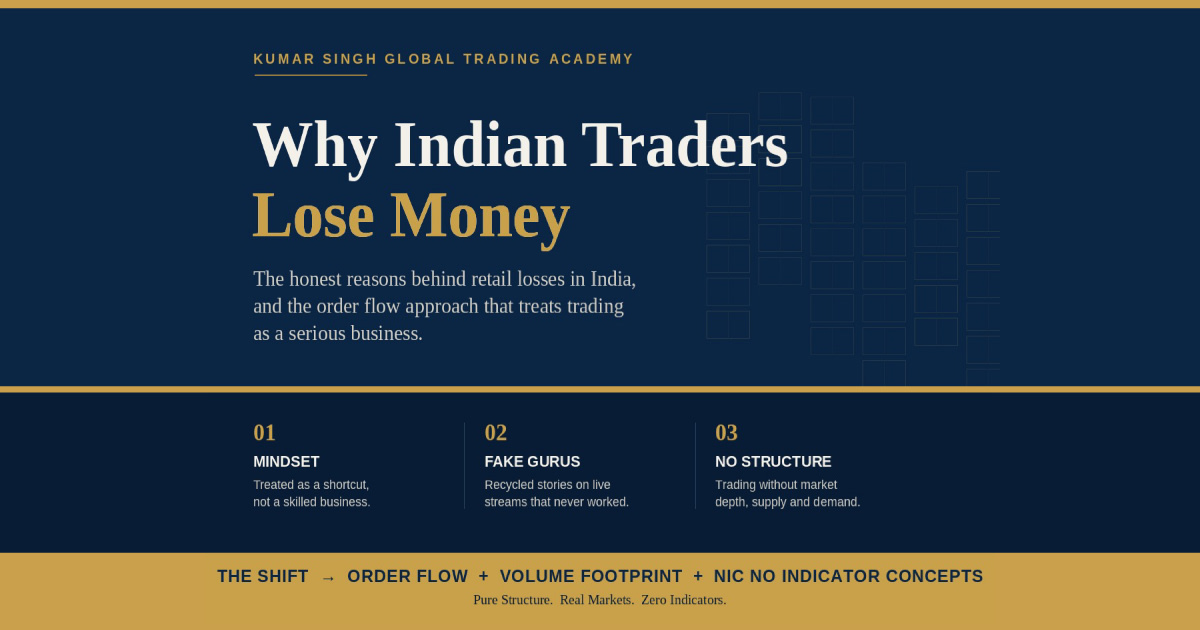
The honest reasons behind retail losses in India, and the order flow approach that treats trading as a serious business.
The most common reason Indian traders lose money is not futures and options. It is a belief. The belief that trading is a fast way to get rich. That belief is wrong, and it quietly empties accounts every single day.
Trading is a noble business. It belongs in the same room as any other serious profession. It asks for skill, patience and respect for the work. No real business makes a person rich overnight, and trading is no exception. Treat it like a slot machine and the market will treat you like one of its many donors.
Most retail traders never make that shift in the mind. They open an account, fund it, and start clicking. No structure. No plan for risk. No idea where the real money in the market is sitting. They are not trading. They are hoping.
Reading the market is part science, part art. The science is the data. Market depth. Market structure. Supply and demand. Where large players are placing money for a bullish or a bearish move. None of this is rocket science. It is structured education, and it needs correct guidance from someone who has actually done the work.
The art is everything around the data. Risk management. Psychology. Position handling. A trader has to be proactive, not reactive. You should know why you are entering, where you are entering, and how and when you plan to exit. Before the trade, not after it.
Skill on the chart without control over the self is half a trader. Control over the self without skill on the chart is the other half. The market pays the people who carry both.
Public data from many sources points to the same picture. A large share of loss making traders in India sit in the futures and options segment. The real question is why.
The answer is the same belief in a different costume. People see futures and options as small money for a big move. Low investment, large gain. That framing pulls them in, and the leverage takes them out. They are not respecting the instrument. They are gambling with a tool that punishes the unprepared faster than any other.
Leverage does not create skill. It magnifies whatever you already are. A disciplined trader and a hopeful one both get amplified. One survives. One does not.
The second big drain on retail capital is the flood of trading influencers. Markets evolve every single day, yet a lot of online content is built on old ideas with the wrong skill set behind them. Stories about trades that were already done. Charts explained after the move has finished. None of that prepares anyone for the next candle.
Thousands of traders gather on a live stream and listen to a mentor narrate the past. It feels like learning. It is mostly entertainment. The chart was read after it had already played out, which is easy, and which teaches nothing about reading the right edge of the screen in real time.
Real education is different. It is structured, it is current, and it improves your skill rather than your screen time. The market does not reward the loudest voice. It rewards the prepared mind.
Here is the part most people skip. The market runs on money and volume. Someone is bidding, someone is asking, and every buy and sell happens for a reason. Nothing moves by magic.
If a trader cannot see where that activity is concentrated, they are guessing. They watch price on its own and invent a story to fit it. Price is the result. Order flow and volume are the cause. Trading the result while ignoring the cause is how accounts bleed out without anyone noticing.
This is the gap that proper education has to close. Not more indicators stacked on a chart. A clear read of who is doing what, and where.
This is where the approach changes. Instead of lagging indicators that repackage old price, you read the market through institutional order flow and the volume footprint.
Order flow shows the live tug of war between buyers and sellers. The volume footprint shows where that volume actually traded inside each candle, not just the open and the close. Together they reveal market depth, supply and demand zones, and the points where larger players are committing money. You stop reacting to price and start reading the structure behind it.
This is the spine of the NIC No Indicator Concepts methodology. Price and volume only. No indicators on the chart. A way of seeing the market that respects how it actually works.
NIC No Indicator Concepts is built on one idea. Strip the chart down to what is true. Price and volume. Everything else is noise dressed up as insight.
Indicators are math applied to past price. They will always describe what has happened, never what is happening. NIC No Indicator Concepts removes them and replaces them with a structured read of order flow and footprint, so the focus stays on cause rather than echo.
It is not a shortcut, and it is not a signal service. It is structured education for traders who are ready to treat the screen like a profession. Skills, dedication and consistency over hype and hope.
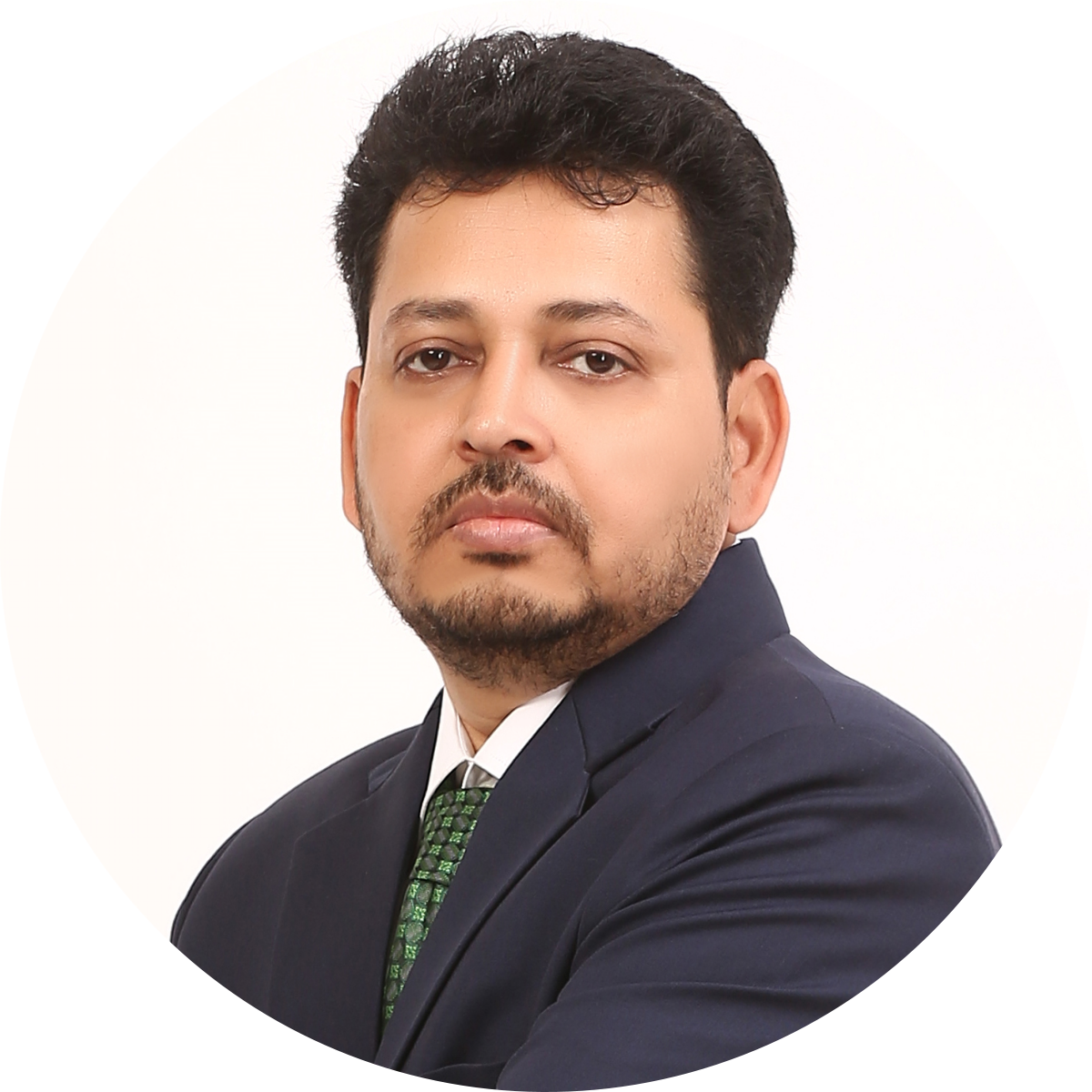
Kumar Ravishanker Singh, professionally known as Kumar Singh, has been reading market independently since 1994. NIC No Indicator Concepts is the result of roughly three decades of independent technical research into how price and volume actually behave.
Kumar Singh Global Trading Academy (OPC) Private Limited was founded to teach that work in a structured way. Pure structure. Real markets. Zero indicators. The focus stays on building real skill in order flow and volume footprint reading, the kind that holds up at the right edge of the chart where decisions are actually made.
If you have been losing money and you are tired of guessing, the problem is rarely the market. It is the method. Change the method, respect the business, and the relationship with the market starts to change with it.
This content is for educational purposes only and does not constitute investment, trading or financial advice, or any recommendation to buy or sell securities. Trading and investing in financial markets carry a high level of risk, including the possible loss of capital. Kumar Singh, and Kumar Singh Global Trading Academy (OPC) Private Limited is not registered with SEBI or any financial regulatory authority worldwide. Past performance is not indicative of future results. Please consult a qualified, registered financial advisor before making any trading or investment decision.
What retail traders get wrong, and what order flow shows instead.
Most lose because they treat trading as a quick way to get rich rather than a serious business. Without structure, risk control and a clear read of order flow and volume, they trade on hope. The instrument is rarely the core problem. The mindset and the missing education are.